
Someone much wiser than I once told me if you’re lucky, you never stop learning.
In fact, if you’re really lucky and you learn that something you believe isn’t true, you are intelligent enough and flexible enough to change your mind.
This is one reason fanatics and zealots can be such problems. When Bill Nye (the Science Guy) debated fundamentalist Ken Ham on the subject of creationism in 2014, the moderator asked a very telling question.
“If you believe something on Monday and the facts change on Wednesday, does that change what you believe on Friday?”
Nye’s answer was yes, of course.
Ham’s was no.
Of course it was. He was being asked if anything could change the most important belief of his life, and any different answer would mean it wasn’t rock solid.
There few things about which my own beliefs are completely rigid, other than perhaps the Law of Reciprocity, but I also can’t think of anything I once believed that I now believe the exact opposite.
That doesn’t mean there aren’t things I once thought were true turned out to be false, or at least that they were not as significant as I believed they were.
One of those things was Telstar 1.
Wow, Mike! That’s quite a segue.
I was 12 years old and living in Ohio in the summer of 1962. A few hundred yards north of us, an easy-to-climb fence separated us from a massive construction project. When it was completed, Interstate 70 would span 2,150 miles from Baltimore to Salt Lake City, but in the summer of 1962 north of Dayton, Ohio, it was just a graded roadbed waiting to be paved.
In 1962, the United States was still a very big country in a very big world. The interstates changed the first part, but it was Telstar 1 and what followed that would change the second.
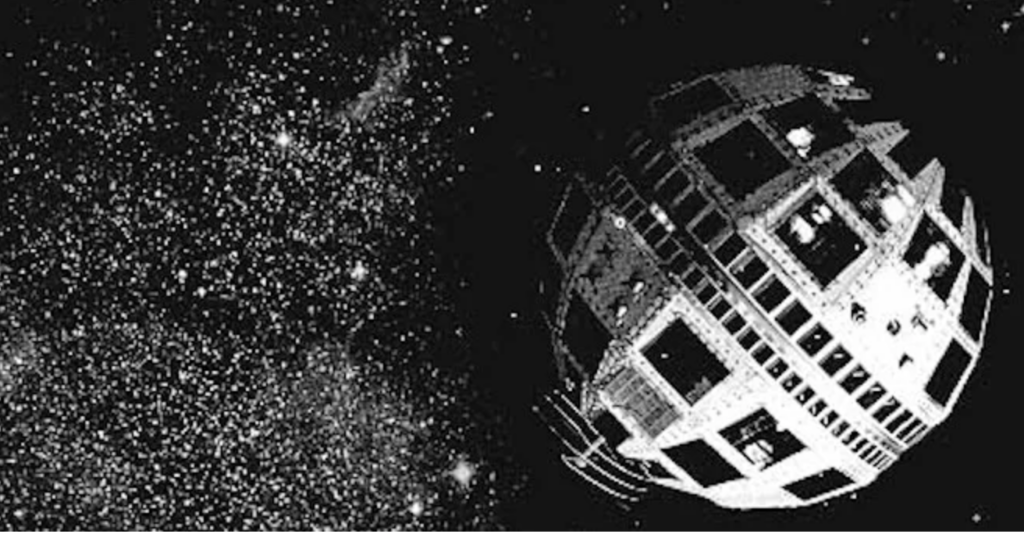
It may be difficult for anyone under the age of 70 to realize, but before communications satellites, the only way to make phone calls to Europe was via the transatlantic cable on the bottom of the ocean. The only way to see video of news events was to put them on a plane and send them to New York.
On July 10, 1962, NASA launched a satellite created by Bell Labs and financed by AT&T, and less than two weeks later, television viewers in Europe were able to see live a press conference by U.S. President John F. Kennedy.
Telstar 1 was a really big deal. Events that could not be witnessed live — World War II, Queen Elizabeth’s coronation and others — had only been seen before in movie theater newsreels. Transatlantic phone calls often took hours to put through.
Really something, huh?
There are now more than 14,500 active satellites in orbit, most of them used for one form or another of communication. Telstar 1 is still in orbit, although it has not been operational for more than 63 years.
I never realized this, but Telstar 1 was only functional for approximately seven months. It was damaged by radiation from a U.S. nuclear test explosion in outer space and stopped working at all by February 1963.
Still, by then they knew what a big deal it was and they got more communications satellites up as soon as possible.
One other thing I have never forgotten about Telstar is the wonderful instrumental released that fall by a group called the Tornadoes. It went all the way to No. 1 on the Billboard Hot 100 and I still love listening to it 64 years later.